Cargo ships, also known as merchant vessels or freighters, consist primarily of dry cargo ships and liquid cargo ships. They form the lifeline of the global trading system, carrying over 80% of international trade goods. These massive vessels transport raw materials, manufactured goods, energy, and food across oceans, connecting economies across continents. Indispensable infrastructure for modern globalization, they navigate the world’s seas.
Dry Cargo Ships
Container Vessel
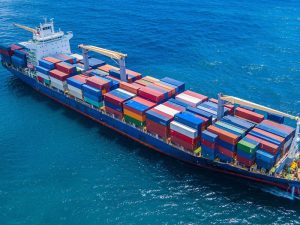
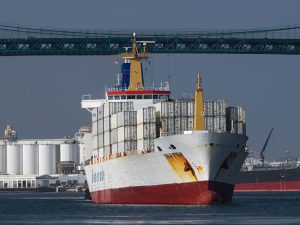
Also called boxships, these specialize in carrying standardized containers. Their decks and hatch covers are designed for container stacking, featuring cell guides and lashing equipment throughout holds and on deck for securing containers. Typically, they have wide and long hatch openings, and hold dimensions are standardized for containers. Advantages include easy transshipment, high loading/unloading efficiency, fast turnaround, good cargo protection, and relatively low transport costs. They generally sail faster than other cargo ships, some exceeding 30 knots.
Bulk Carrier
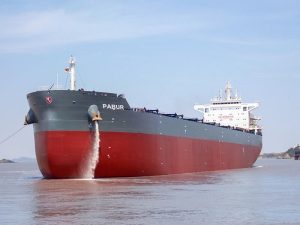
Designed to transport unpacked dry bulk cargo like ore, coal, grain, cement, and fertilizer. They have robust hulls and large hatches for efficient loading/unloading using large grabs, conveyors, or pneumatic systems at ports. Holds are typically large and open. Sub-types exist based on primary cargo, such as ore carriers, coal carriers, grain carriers, cement carriers, and timber carriers.
General Cargo Vessel
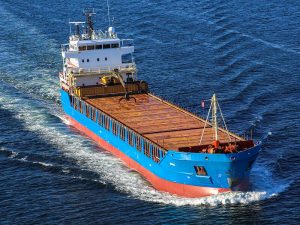
Also known as conventional cargo ships, these are traditional and versatile vessels carrying packaged, boxed, bagged, drummed, or bundled general cargo. Since general cargo lots are smaller, typical capacities are around 10,000-20,000 metric tons. They usually feature double decksand are equipped with multiple shipboard cranes, allowing them to call at ports with simple facilities.
Roll-on Roll-off (Ro-Ro) Vessel
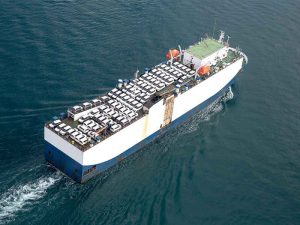
These carry cargo units on wheels (like trailers, chassis, or loaded pallets), moved directly in and out of holds by trucks or forklifts. They excel at transporting wheeled cargo such as cars, trucks, construction machinery, and trailers. Key features include large ramps for drive-on/drive-off loading and internal multi-deck vehicle decks. They offer very fast loading/unloading speeds and high efficiency, particularly suited for vehicle transport.
Refrigerated Vessel
Specialized vessels for temperature-sensitive cargo like fruits, vegetables, meat, and fish, also often carrying refrigerated containers. Holds are heavily insulated refrigeration chambers with powerful cooling systems to maintain specific low temperatures. The height between decks or between deck and tank top is smaller than on other cargo ships to prevent crushing lower cargo due to excessive stacking.
Lighter Aboard Ship
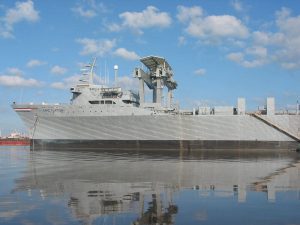
Also called mother ships, these carry standardized barges (lighters) loaded with cargo. Goods are first loaded into lighters, which are then loaded onto the LASH vessel. At transshipment ports, the lighters are unloaded and towed by tugs to inland destination ports. Their hull form resembles container ships, with a flush deck and the bridge/superstructure positioned as far forward as possible. While offering specific advantages, LASH vessels are less active in today’s market due to high construction costs, expensive transportation, and complex, damage-prone barge handling equipment.
Semi-Submersible Heavy Lift Vessel
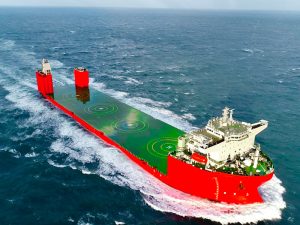
These vessels adjust their ballast water to partially submerge their main deck, allowing specific cargoes like barges, yachts, ships, or drilling platforms to be floated onto the deck for transport. After loading, the deck is raised. They typically have deep drafts, with part of the hull or structure visible above water. Their high submerged volume makes them less susceptible to wave action on the surface. Recently, with the expansion of the Lianyungang port area, these vessels are increasingly seen transporting special oversized cargo like caissons for marine engineering projects.
Liquid Cargo Ships
Oil Tanker
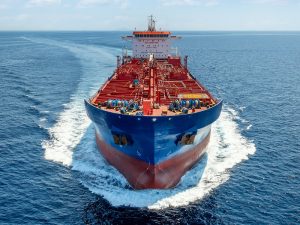
Oil Tanker is a large vessel specifically designed for transporting crude oil, petroleum products, and liquid chemicals, playing a central role in the global energy transportation system. The most distinctive feature of this type of ship is its flat deck with almost no protruding structures, facilitating the installation of complex pipeline systems. The cargo holds consist of multiple independent liquid tanks, equipped with intricate piping and pumping systems for loading, unloading, and cleaning. During cargo operations, tankers do not rely on traditional cranes but instead use onboard pumps connected to shore pipelines for efficient transfer. Based on size, they are classified into small tankers, Aframax, Suezmax, Very Large Crude Carriers (VLCC), and Ultra Large Crude Carriers (ULCC).
Chemical Tanker
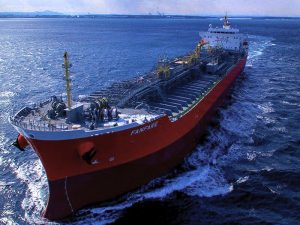
Carry various liquid chemicals. They have extremely high requirements for tank material, coatings, temperature/pressure control, cargo segregation, and safety. Types include general product tankers, oil/product tankers, and parcel tankers (for multiple chemical grades). Structurally, they often feature double bottoms and double sides. Tanks are segregated and equipped with dedicated cargo pumps and piping systems. Advanced tank cleaning and monitoring systems are standard.
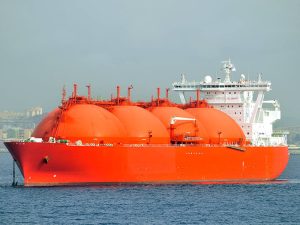
Liquefied Gas Carrier
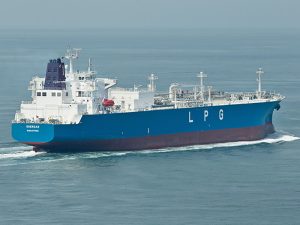
Transport Liquefied Natural Gas (LNG) or Liquefied Petroleum Gas (LPG). These cargoes have very low boiling points, are often flammable/explosive, and some are highly corrosive or toxic. Classified by tank design: independent prismatic tanks or membrane tanks. These vessels feature complex cargo containment systems, demanding high technical specifications, and are consequently very expensive to build.