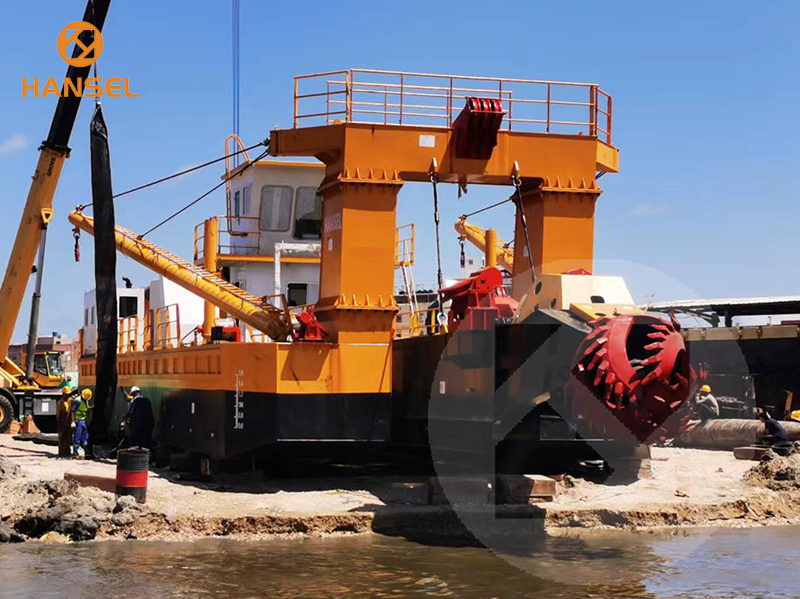
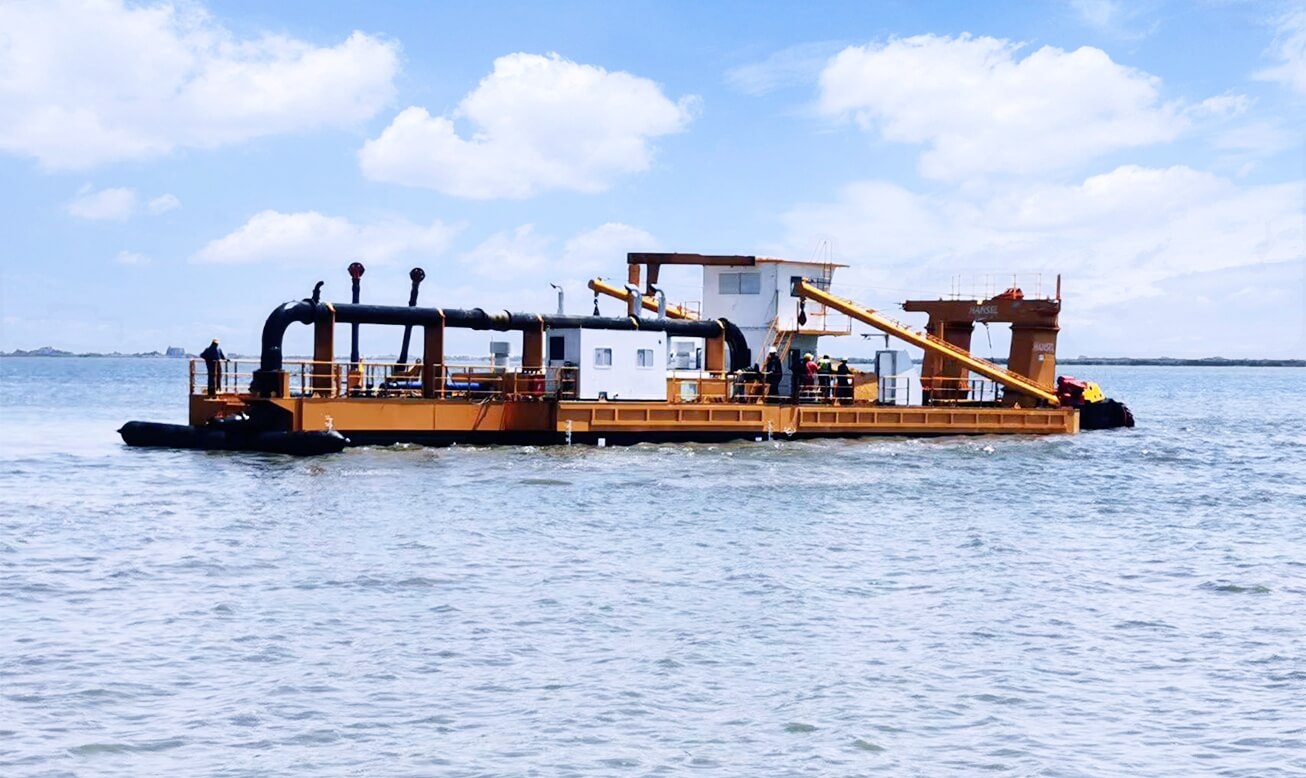
Cutter suction dredgers (CSDs) typically operate using spuds as the main pivot point, while side anchors control the swinging and forward movement of the vessel. Depending on the positioning system, several dredging methods are commonly used, including the spud carrier method, three-anchor positioning method, single-spud multi-anchor method, and extended anchor configurations.
Among these, the spud carrier method and the three-anchor positioning method are the most widely applied in modern dredging projects.
1. Spud Carrier Method
The spud carrier method is one of the most commonly used techniques, offering high accuracy and stable operation.
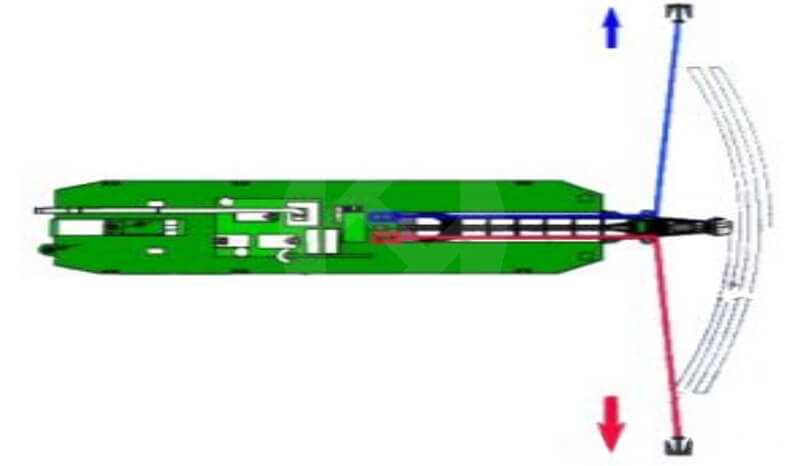
At the start of operations, the spud carrier is positioned at its initial (zero) position, and the main spud is aligned with the dredging centerline. Once the dredger reaches the starting point, the main spud is lowered into the seabed, and the auxiliary spud is lifted.
Based on soil conditions and hydrodynamic factors, a forward stepping distance is determined. After completing one dredging cycle, the dredger swings back to the centerline, lifts the cutter ladder, and advances forward using the hydraulic system.
When the spud carrier reaches the end of its travel, the auxiliary spud is lowered, the main spud is lifted, and the carrier is reset for the next cycle.
Advantages:
- Precise alignment along the dredging centerline
- Stable cutter movement
- Reduced risk of under-dredging or over-dredging
The maximum dredging width is typically 1.1 to 1.2 times the vertical distance between the main spud and the cutter head. The swing angle is generally limited to ±40°. For wider channels, dredging must be carried out in multiple passes.
2. Three-Anchor Positioning Method
In open water areas with strong waves and currents, where spud positioning may be unsafe, the three-anchor positioning method is often used.
This method uses the intersection point of three anchor lines as the pivot for dredger movement. By adjusting the anchor lines, the vessel can swing and advance efficiently.
Advantages:
- High flexibility and easy maneuverability
- Faster forward movement
- Ability to advance from various positions
Limitations:
- Lower positional stability (soft positioning)
- Reduced trench accuracy
- Anchor dragging may cause misalignment or under-dredging
This method typically utilizes a central anchor point system (spud pole or anchor frame) to control the anchor lines and maintain vessel position.

3. Extended Dredging Methods
The choice of dredging method depends on the vessel configuration and site conditions:

Single-Spud with Multi-Anchor Method
Combines spud positioning with anchor control, reducing repositioning time while improving accuracy compared to the three-anchor method.
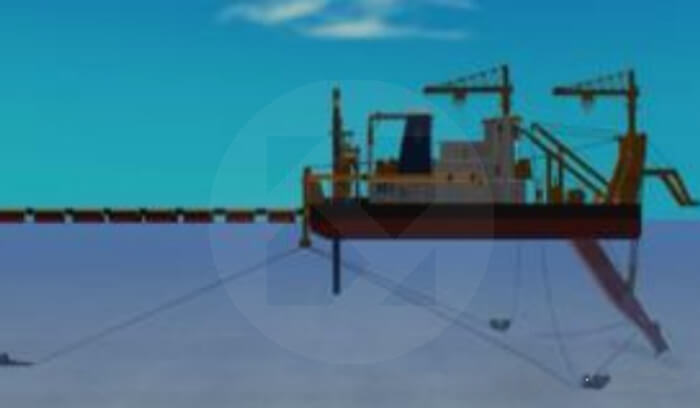
Three-Anchor Five-Line Method
An optimized version of the three-anchor system that reduces anchor deployment requirements and improves operational efficiency.
4. Selection of Dredging Method
To adapt to various project conditions, several improved methods have been developed:
- Dredgers equipped with dual spuds → Spud-based dredging
- Dredgers with spud carrier systems → Spud carrier method
- Dredgers with anchor systems → Three-anchor positioning method
- Multi-system dredgers:
- Open water, strong waves, lower accuracy → Three-anchor method
- Narrow areas, hard soil or rock, high accuracy → Spud carrier or multi-anchor method
Selecting the appropriate dredging method is essential for ensuring operational efficiency, safety, and project quality.