Dredgers are the primary dredging equipment. With the continuous development of the dredging industry both domestically and internationally, the types of dredgers have been increasing to meet the construction needs of different projects. The key to rationally utilizing these mechanical equipment and maximizing their benefits lies in the proper selection of dredging equipment.
Trailing suction hopper dredger
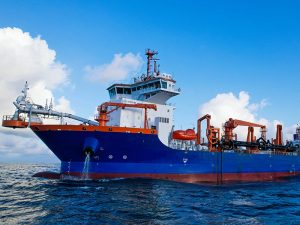
Trailing suction hopper dredger (TSHD) is a self-propelled and self-loading hydraulic dredger. It sucks slurry through the drag-heads on both sides or at the stern of the vessel, dredging while sailing, and stores the slurry in the hopper. Once fully loaded, it sails to the disposal area to discharge the dredged material. They have strong resistance to wind and waves, making them suitable for offshore operations and open waters such as ports and navigation channels.
Cutter suction dredger
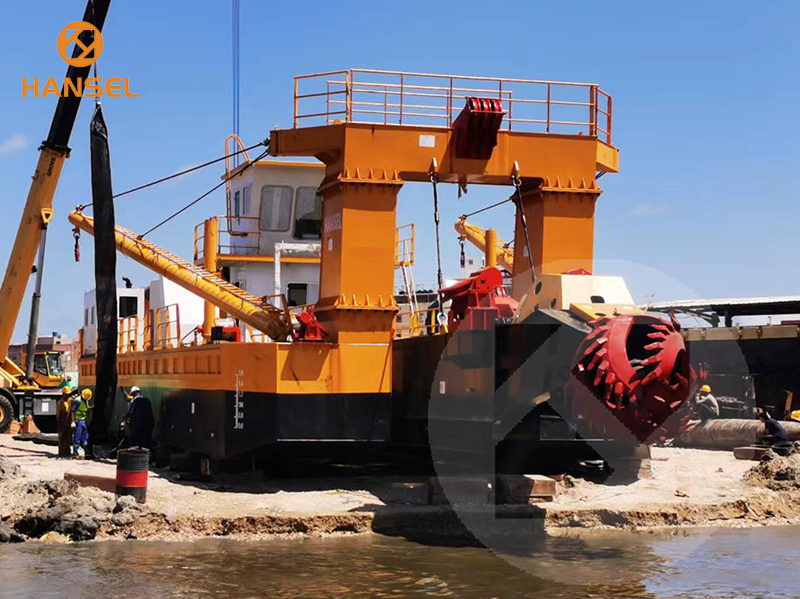
Cutter suction dredger (CSD) offers precise control over slope excavation depth, ensuring high construction quality with a smooth and even dredging surface. It utilizes a rotating cutter-head to break up seabed sediments, which are then sucked up by the dredge pump and discharged through pipelines for land reclamation or into barges. The CSD can complete the entire dredging process – excavation, transportation, discharge, and sediment handling – in one continuous operation. It is particularly suitable for dredging in hard soil layers or medium-hard rock formations.

Bucket dredger
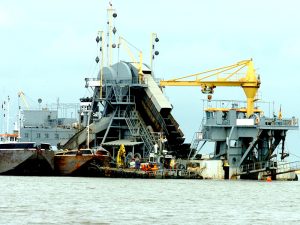
Bucket dredger is suitable for long-distance soil transportation or projects with relatively wide river surfaces, and can adjust the dredging depth. During construction, it uses barges for soil transportation, with continuous excavation through bucket chains that drive digging buckets, and the sediment is discharged into barges via chutes. It is suitable for medium-scale river and canal dredging, as well as projects with strict flatness requirements such as ports and docks.
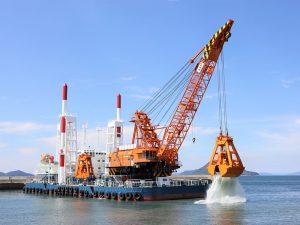
Grab dredger
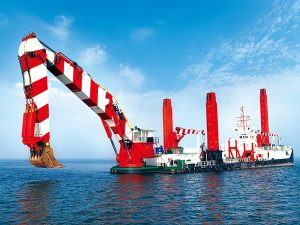
Grab dredger is characterized by its large excavation depth. Its grab bucket can be detached and the vessel can also function as a crane ship. It employs barges for soil transportation, using its boom to suspend the grab bucket which collects seabed sediment and discharges it onto barges or shore. Except for fluid mud, the grab dredger is suitable for all soil types. It demonstrates particularly high efficiency when dredging coarse and medium sand. It is applicable for hard soil, gravel and underwater obstacle removal, and can operate in confined waterways. Primarily used for small-scale dredging projects, it is not suitable for large-scale engineering works.
Dipper dredger
Dipper dredger, a type of single-bucket dredger, concentrates all its power on a single dipper bucket. It extends the bucket into water through its boom and dipper stick, penetrates the riverbed or seabed for excavation, then hoists the entire assembly (bucket, dipper stick and boom) out of water via winch traction. After reaching proper height, the revolving device swings it to discharge soil either ashore or onto barges by opening the bucket bottom, then returns to the dredging position. Particularly suitable for shallow water and complex terrains requiring extra-hard excavation.