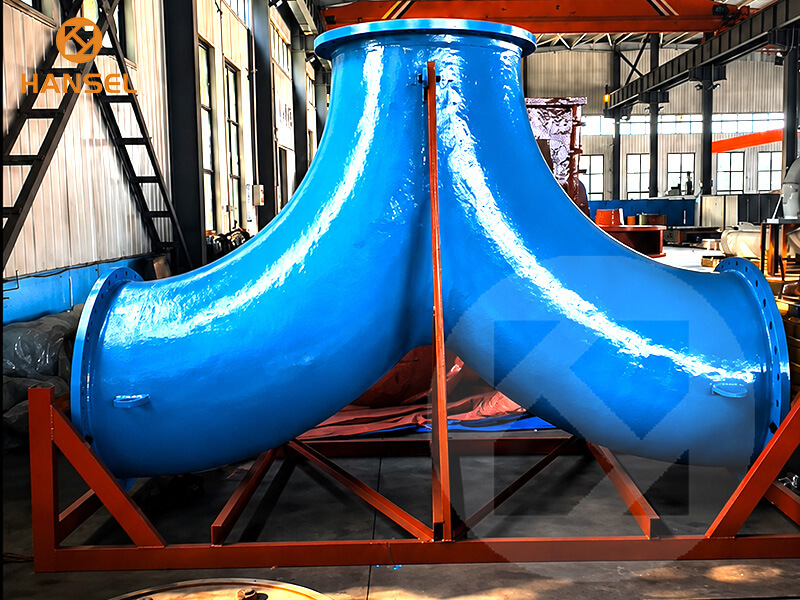
For cutter suction dredgers (CSDs), transporting dredged material over long discharge distances requires more than efficient excavation and suction. The dredge pump system must provide sufficient pressure to move high-concentration slurry through the entire discharge pipeline while maintaining stable and efficient operation.
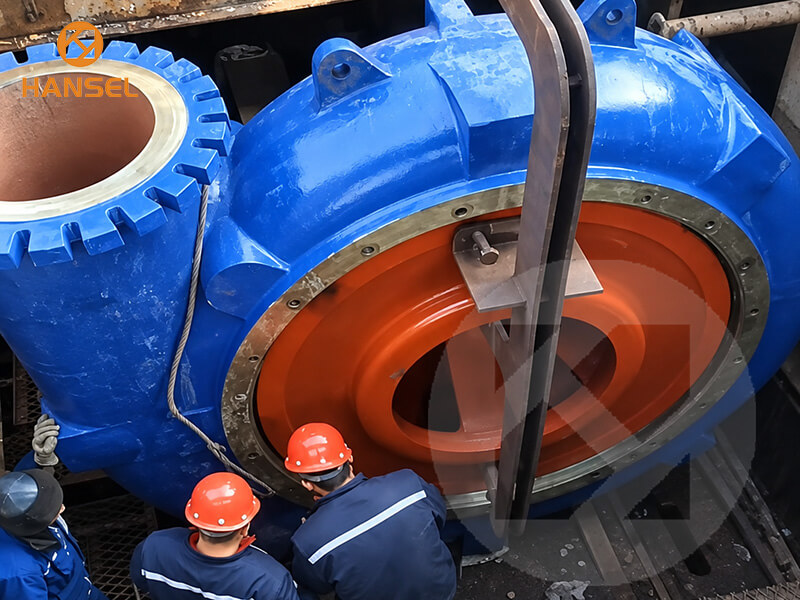
A deck dredge pump is an important part of this system. Installed on the deck of a cutter suction dredger, it receives slurry delivered from the submerged dredge pump and provides additional pressure for transporting the mixture to the designated discharge or reclamation area.
For dredging projects involving long pipelines, high slurry concentrations, abrasive materials, or changing operating conditions, selecting and configuring the right deck dredge pump can significantly affect overall dredging efficiency, pipeline safety, energy consumption, and equipment service life.
What is Deck Dredge Pumps?
Deck dredge pums are heavy-duty centrifugal slurry pumps installed on the deck of a cutter suction dredger.
During dredging, the cutter head loosens the seabed or riverbed material. The slurry mixture is then drawn into the suction system and transported by the submerged dredge pump. When the required discharge distance exceeds the effective delivery capability of the submerged pump, a deck pump provides additional pressure to continue transporting the slurry through the discharge pipeline.
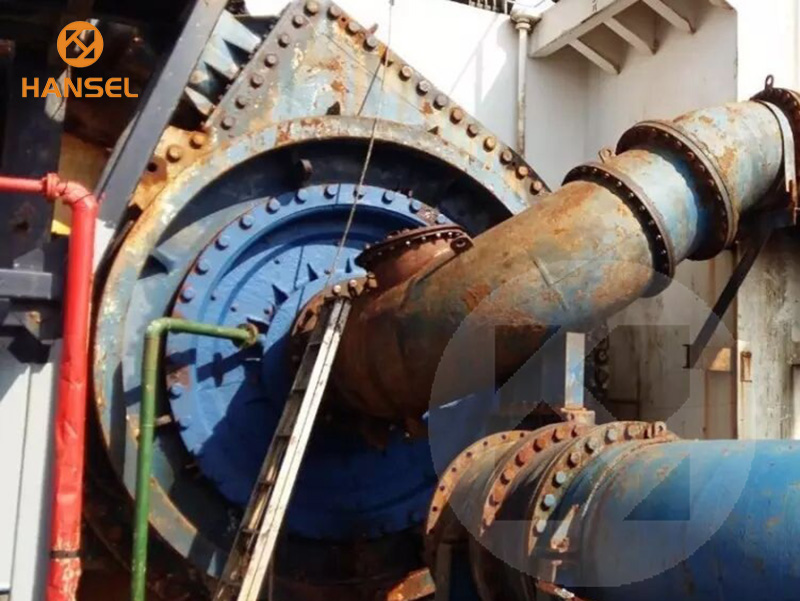
The typical process can be simplified as:
Cutter Head → Suction Pipeline → Submerged Dredge Pump → Deck Dredge Pump → Discharge Pipeline → Reclamation or Disposal Area
Because one of the main purposes of the deck pump is to extend the slurry transportation distance, deck dredge pumps are generally designed to provide relatively high head while maintaining the flow required for stable slurry transportation.
Why are Deck Pumps Important for Cutter Suction Dredgers?
The discharge distance of a cutter suction dredger can vary significantly from one project to another.
Some dredging projects only require short-distance discharge near the dredging area, while reclamation projects may require slurry to be transported through pipelines extending several kilometers.
As the pipeline becomes longer, hydraulic resistance increases. Additional resistance can also come from:
- Pipeline bends
- Elevation differences
- Floating and shore pipeline arrangements
- Slurry concentration
- Soil characteristics
- Particle size
- Pipeline diameter
- Internal pipeline condition
The dredge pump system must overcome these losses while maintaining sufficient slurry velocity.
If the pump head is insufficient, slurry velocity may fall below the critical transportation velocity. This increases the possibility of sediment deposition inside the pipeline and, in severe cases, pipeline blockage.
A properly designed deck dredge pump therefore helps maintain stable slurry transportation while extending the effective discharge range of the dredger.
Whatsapp:+86 13382772498
Email:[email protected]
JIANGSU HANSEL MARINE EQUIPMENT CO., LTD